
WHALE WATCHING IN OCEANSIDE IN SEPTEMBER: A LOCAL’S GUIDE TO LATE BLUE WHALES AND CALM WATER
In the first days of August this year, our crew was still watching a blue whale roll along the surface a short run outside Oceanside Harbor. The largest animal that has ever lived, breathing in flat, glassy water, close enough that nobody on the rail said a word. That trip is exactly why we push back when guests tell us they are waiting for whale season to start in the winter.
September on this stretch of coast is not the end of anything. The summer animals are still here and still feeding, the water is at its warmest of the entire year, the wind usually lays down, and the harbor gets noticeably quieter once Labor Day passes. It is one of the most comfortable months we run, and one of the most underrated.
Here is an honest look at what we see off Oceanside in September, what conditions are actually like on the water, and how to choose the right trip.
What Whales Can You See Off Oceanside in September?
September sits in the back half of blue whale season. Our own season FAQ runs blue whales from May through November, and NOAA Fisheries describes blue whales feeding off the U.S. West Coast through the summer months, with roughly May through October the active window and June through August the most productive stretch. So a September blue whale is a real possibility rather than a long shot, and when it happens it is genuinely staggering. NOAA puts blue whales at up to 110 feet and up to 330,000 pounds, the largest animal on Earth, and they remain listed as endangered under the Endangered Species Act.
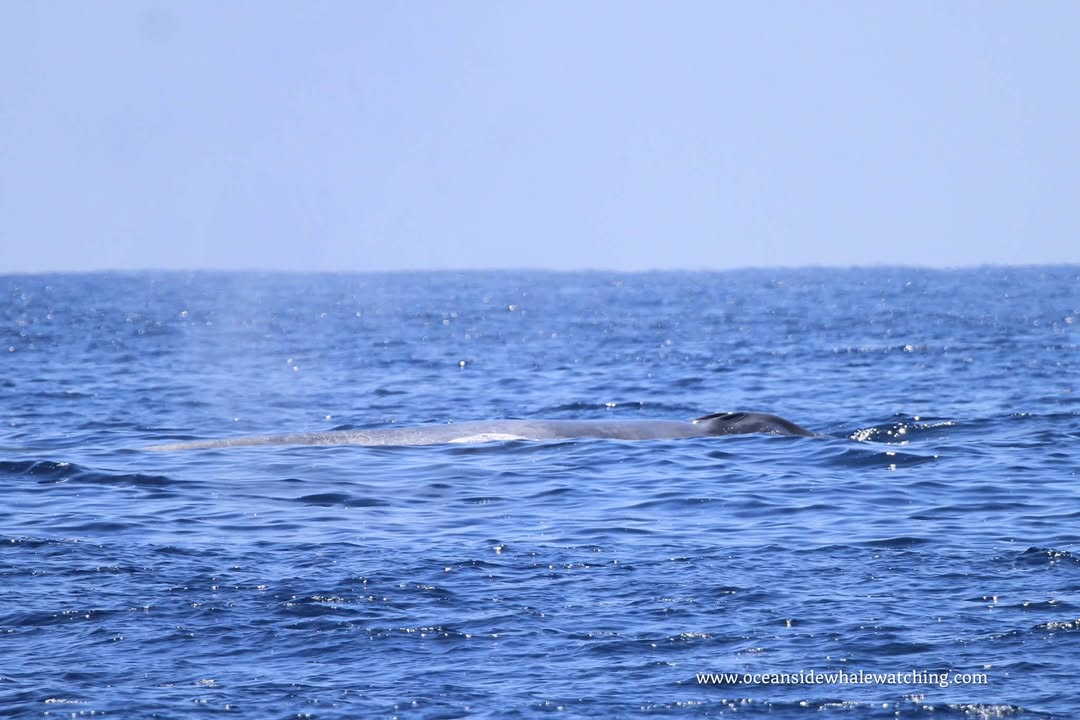
The blues still around in September are usually working deeper, cooler water where krill is holding, which means the trips that find them tend to be the ones with a captain willing to read the day’s conditions rather than run straight to yesterday’s spot. If you want the full picture of how that season builds, our guide to peak blue whale season in July covers the front half of it.
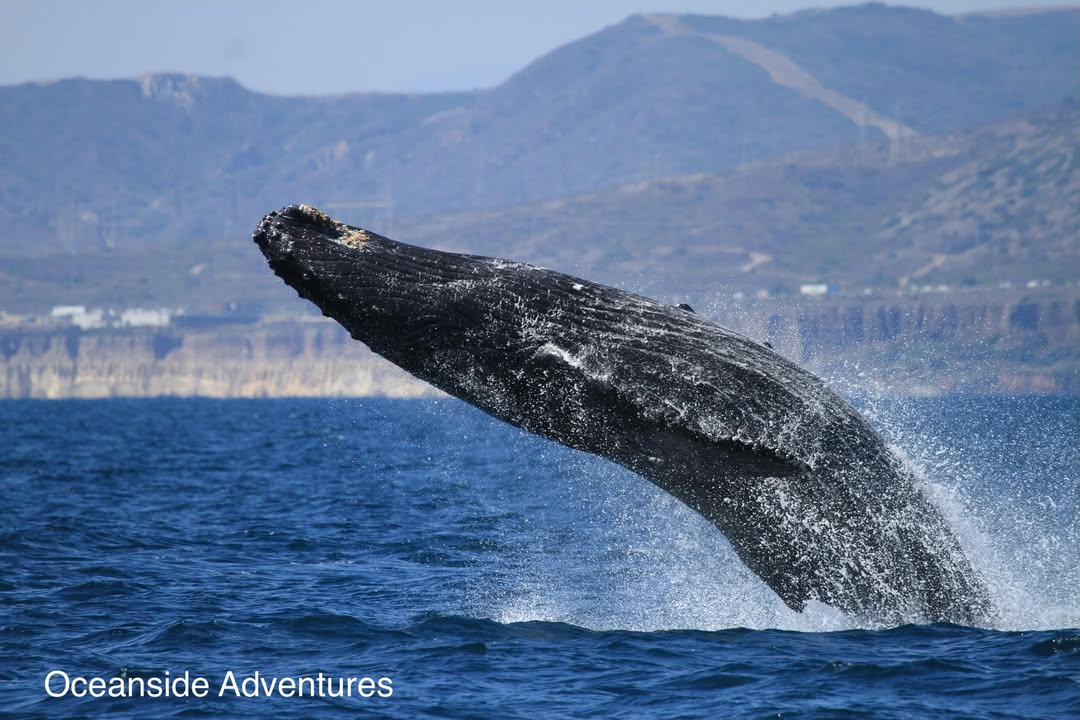
Humpbacks are the September workhorse. NOAA research on California humpback distribution puts the prime foraging window from April through November, with higher abundance in the Southern California region in summer and autumn. That matched our summer almost exactly. July gave us weeks of breaching, fluking, close-in humpbacks, including one that surfaced beside the boat and stayed with us long enough that half the deck forgot to lift a camera. They are the most acrobatic large whale we get here, and September usually keeps them around.
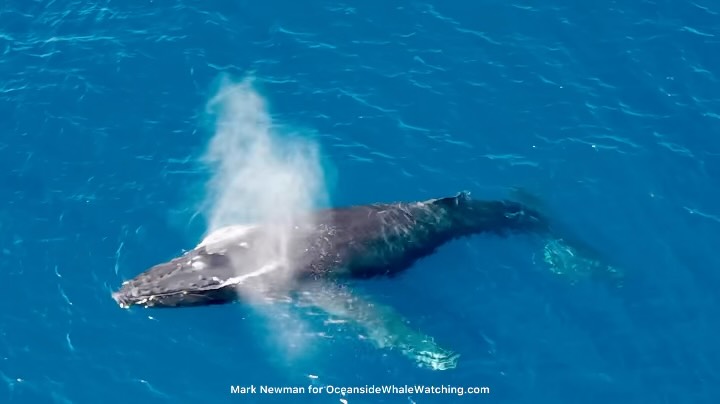
Fin whales round out the big three. They are the second largest animal on the planet at 75 to 85 feet and 40 to 80 tons, and NOAA estimates the West Coast stock at roughly 9,000 animals and growing. Fins are fast and low in the water, so you often get a towering spout and a long sleek back rather than a tail. We wrote a full field guide to fin whales off Oceanside if you want to know what to look for.
Minke whales are the wildcard. Small, quick, and famously hard to follow, they show up all summer here and occasionally do something spectacular. We watched one launch completely clear of the water in May, which almost nobody gets to see.
What you will not see in September is a gray whale. Their season officially opens on November 28 and runs through the end of April, so gray whales are a winter and spring conversation, not a September one.
Is September a Good Month for Whale Watching in Oceanside?
It is one of the best months of the year for conditions, and conditions matter more than most people expect.
Water temperature off Oceanside peaks in early September, with sea surface readings generally in the 64 to 72 degree range. Warm water usually comes with lighter afternoon wind and a longer, gentler swell than we get in spring, which makes for a smoother ride and better visibility for spotting spouts. Flat water also means you can see a blow from much farther away, and that changes how much ground a two hour trip can realistically cover.
The other September advantage is the calendar. Once school starts and Labor Day weekend passes, the harbor quiets down. Parking gets easier, boarding is relaxed, and there is more room at the rail. If you have been avoiding a summer trip because you pictured a packed boat, the weeks after Labor Day are the sweet spot.
Bring layers regardless. As we tell every guest, it runs 10 to 15 degrees cooler on the ocean than it feels standing in the harbor parking lot, and a September afternoon that starts at 80 on the sand can feel like a different season two miles out.
Will You See Dolphins in September?
Almost certainly, and this is the part people never plan for.
Common dolphins are abundant off California year round, and NOAA describes them traveling in social groups that average hundreds of animals, occasionally forming megapods of thousands, with documented herds of up to at least 10,000. When one of those megapods decides to run, the entire surface of the ocean turns white. We call it a stampede, and there is nothing else in Southern California quite like sitting in the middle of one.
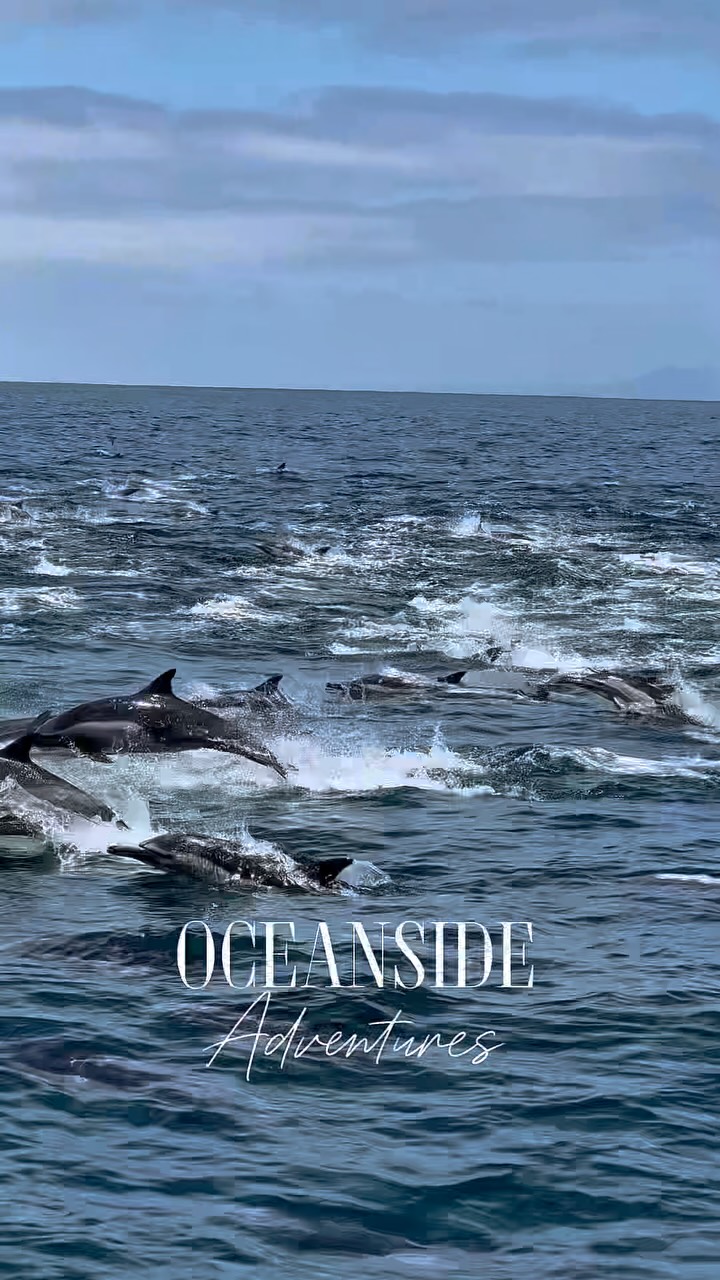
Bottlenose dolphins work the surf line closer to the beach and often ride our bow wave on the way out. Between the two species, dolphins are the single most reliable thing we encounter in September. Our dolphin watching guide breaks down which species you are looking at and how to tell them apart.
What Else Turns Up in September?
The warm water months bring the strange and the wonderful. Mola mola, the ocean sunfish, are one of our favorites. They are the heaviest bony fish in the world at well over 2,000 pounds, and they lie flat at the surface sunning themselves like a floating dinner plate the size of a car door. California sea lions porpoise past constantly and occasionally put on a hunting display right alongside the boat. Blue sharks cruise the deeper water. Seabirds follow the bait.
Late this July we even had Nazca boobies off Oceanside, a tropical seabird that normally lives far to the south. That is the honest appeal of a warm water month here. The ocean does not follow a script, and September is when the script gets loosest.
What Should You Wear and Bring?
Keep it simple. A light jacket or windbreaker over a t-shirt, closed shoes, sunglasses, and sunscreen will cover almost every September trip. Add a hat you do not mind losing. Our full summer packing list goes deeper.
You are welcome to bring dry snacks and non-alcoholic drinks aboard. Ice chests and hot food stay on the dock. We recommend carrying about $20 in cash for snacks, drinks, or souvenirs on the boat.
Plan to check in at least 30 minutes before departure, and give yourself 45 minutes on weekends and holidays so that parking does not become the stressful part of your morning.
When Should You Book Your September Trip?
Mornings are usually the calmest water of the day, which is the right call if anyone in your group is prone to seasickness. Afternoons bring warmer air and beautiful light, and the wind in September is far less of a factor than it is in spring. Both work. If you have flexibility, a weekday after Labor Day is the quietest boat you will find all year.
Labor Day weekend itself is the one September window that fills up, so plan ahead for that one. For the rest of the month, a few days of notice is usually plenty. If you are budgeting the trip, our breakdown of what whale watching in Oceanside costs lays out every price without the guesswork.
Why Start From Oceanside Harbor?
We run from 256 Harbor Drive South, right in front of the historic Lighthouse in Oceanside Harbor. Our boats clear the jetty and are in open water within minutes, which is not true of every departure point in the region. Boats leaving from deep inside a large bay can spend a meaningful chunk of a trip simply getting out to where the animals are. Ours spend that time looking.
The seafloor helps too. The Carlsbad Submarine Canyon cuts shoreward across the continental shelf just up the coast from us, part of a stretch of bottom topography that concentrates bait and pulls feeding animals closer in than you might expect. On a two hour tour, that proximity is a real advantage.
Our 50 foot catamaran and NALA, our 63 foot double deck catamaran, are both built for stability and open sightlines, and every trip is narrated by a captain and a certified naturalist who will tell you what you are looking at and why it is behaving that way. You can see both boats on our vessel page.
For anyone in Carlsbad, Vista, San Marcos, Escondido, Encinitas, or on base at Camp Pendleton, Oceanside Harbor is the closest and the best place to get on the water. If your September plans take you further north into Orange County, our sister operation in Dana Point publishes a September guide for Dana Point that covers that stretch of coast in the same detail.
Book Your September Trip
September gives you the warmest water of the year, the calmest conditions we see, the tail of blue whale season, humpbacks that are still feeding hard, and megapods of dolphins that show up more often than not. Two hours on the water, a short walk from the Lighthouse, and no long transit to get there.
Reserve your spot on the whale watching cruise, or check the September calendar and book directly. We will save you a spot at the rail.