
WHALE WATCHING SEASON IN SAN DIEGO: THE BEST TIME OF YEAR (AND DAY) TO SEE WHALES
People ask us this at the dock almost every day, usually while they are deciding whether to book now or wait: when is whale watching season in San Diego? The honest answer, and the one that surprises most first-timers, is that there really is no off-season here. San Diego County sits along one of the busiest stretches of ocean highway on the planet, and from our home port in Oceanside Harbor at the north end of the county, we see whales or dolphins on the vast majority of our trips in every month of the year.
That said, the ocean does keep a calendar. Different animals move through at different times, the water changes character with the seasons, and the difference between a good day and an unforgettable one often comes down to knowing what is out there right now. After years of running these tours out of North County, we have watched the same rhythm repeat itself season after season. Here is how the year actually breaks down, month by month, so you can pick the trip that matches what you most want to see.
Is There Really a Whale Watching Season in San Diego?
Yes and no. Unlike destinations where whales appear for a few weeks and then vanish, the San Diego coast has marine life year-round. What changes is the headliner. The year has two clear peaks that most people plan around, plus two shoulder seasons that longtime locals quietly consider the best-kept secret on the water.
The two peaks are gray whale season in winter and blue whale season in summer. The shoulder seasons, spring and fall, bring a rotating cast of fin whales, humpbacks, and the occasional rare visitor. And underneath all of it, dolphins are a near-constant presence. If you want the full picture of how the calendar plays out from our harbor specifically, we go deep on it in our complete Oceanside whale watching season guide. For the San Diego region as a whole, keep reading.
Gray Whale Season: December Through April
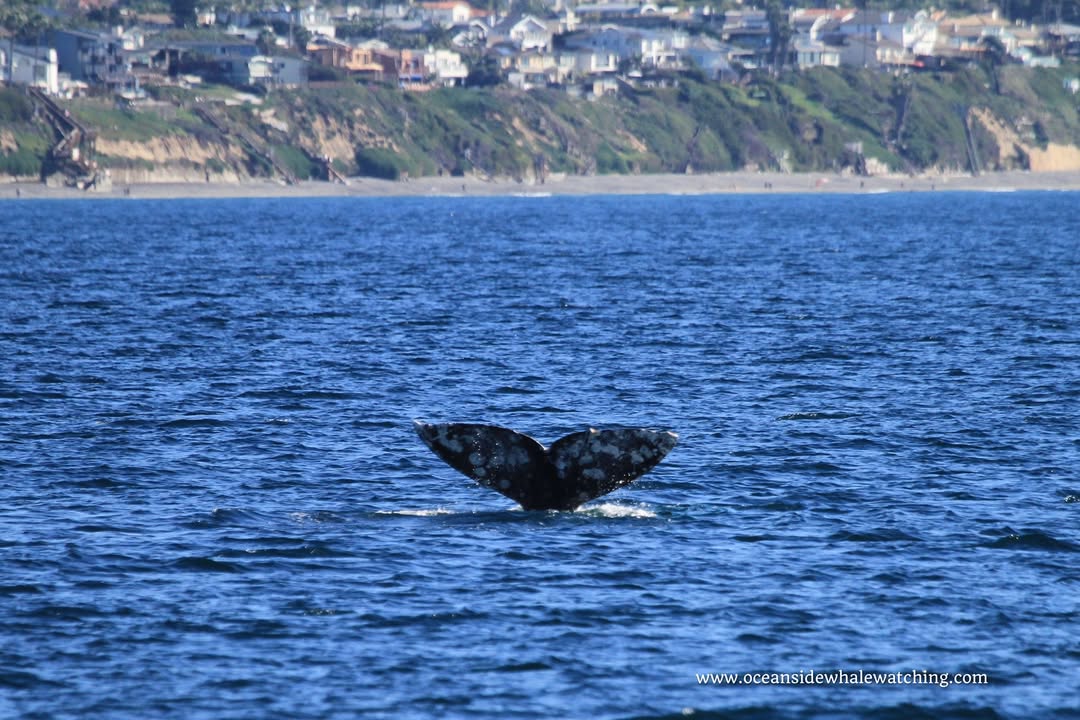
This is the classic Southern California whale season, and for good reason. Every winter, Eastern North Pacific gray whales pass right by us on one of the longest migrations of any mammal on Earth, a round trip of roughly 10,000 to 12,000 miles between their feeding grounds in the Arctic and the warm breeding lagoons of Baja California, Mexico.
The southbound push runs from about December into February, when the whales are moving with purpose toward Baja. Then the migration reverses. From late February through April we see the northbound whales heading home, and this is the stretch we love most, because the mothers are now traveling slowly with their newborn calves tucked close to their sides. January and February tend to deliver the highest concentration of animals, while March and April are prime time for calf sightings.
Gray whales hug the coastline more tightly than most species, which is part of why they are such a reliable winter target off North County. You can read more about what to expect and whether you can spot gray whales in Oceanside, and our sister company Dana Wharf has a helpful deeper resource on the gray whale migration through Southern California if you want to understand the biology behind the journey.
Blue Whale and Summer Season: June Through September
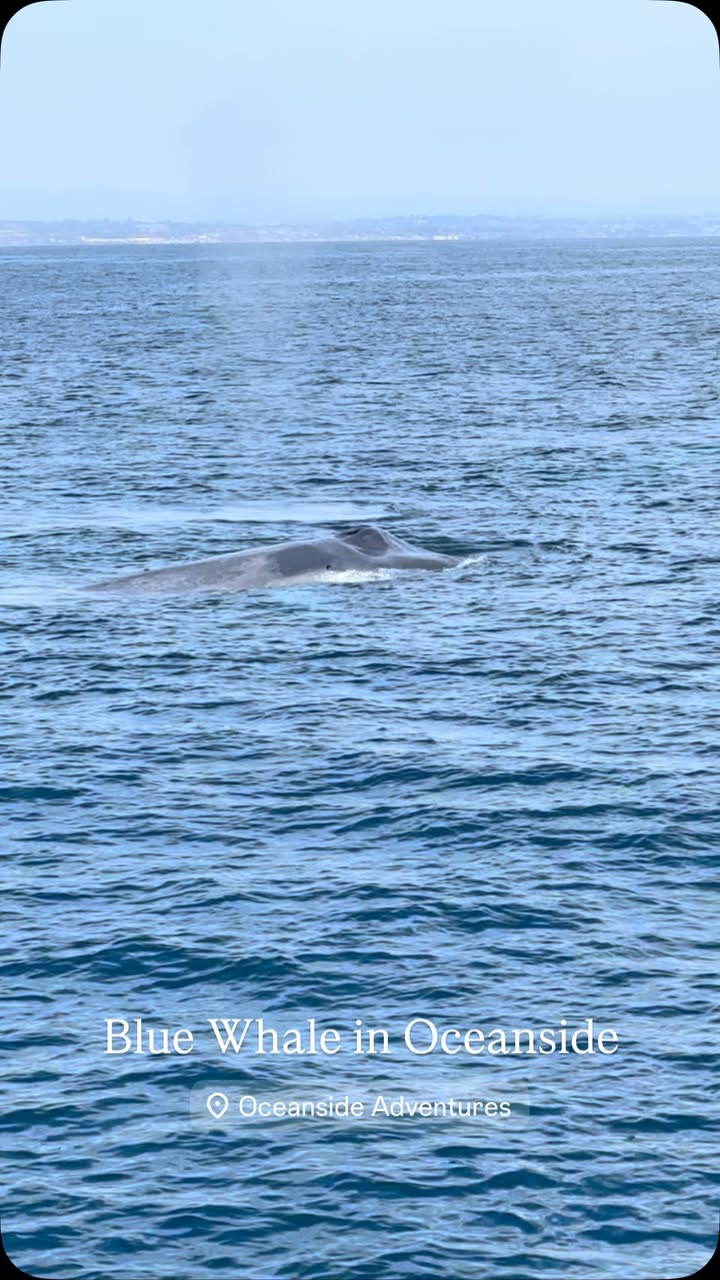
If gray whale season is about a migration, summer is about sheer scale. From roughly mid-June through September, blue whales move into the waters off San Diego to feed on the dense clouds of krill that bloom here. These are the largest animals that have ever lived, larger than any dinosaur, reaching up to about 100 feet long. Seeing one surface alongside the boat, its blow towering into the air before that impossibly long back rolls past, is the kind of moment that stays with people for the rest of their lives.
June and July are usually the strongest months for blues, though the exact timing shifts year to year with the krill. Summer is also the easiest season to plan a trip around: the weather is warm, the seas are often calm, and the long days give us plenty of light. Alongside the blues we frequently share the water with fin whales, humpbacks, and enormous pods of dolphins. If a giant is at the top of your list, start with what it takes to see blue whales in Oceanside and aim for an early-summer trip.
What About Spring and Fall? The Underrated Shoulder Seasons
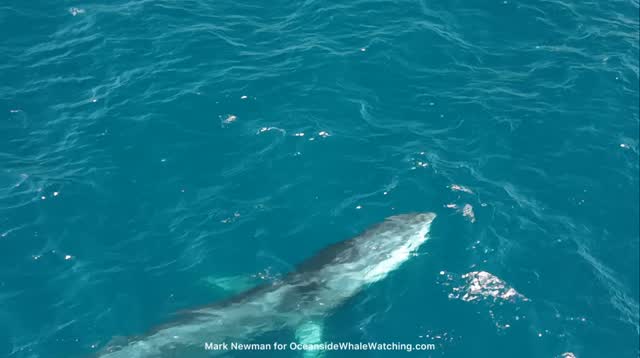
Ask our captains when they would go if they could pick any week, and a lot of them point to the shoulder seasons rather than the two obvious peaks. Spring and fall are when the ocean feels most alive off North County, because the seasons overlap. In spring you can catch the tail end of the gray whale migration and the leading edge of the summer feeders at the same time.
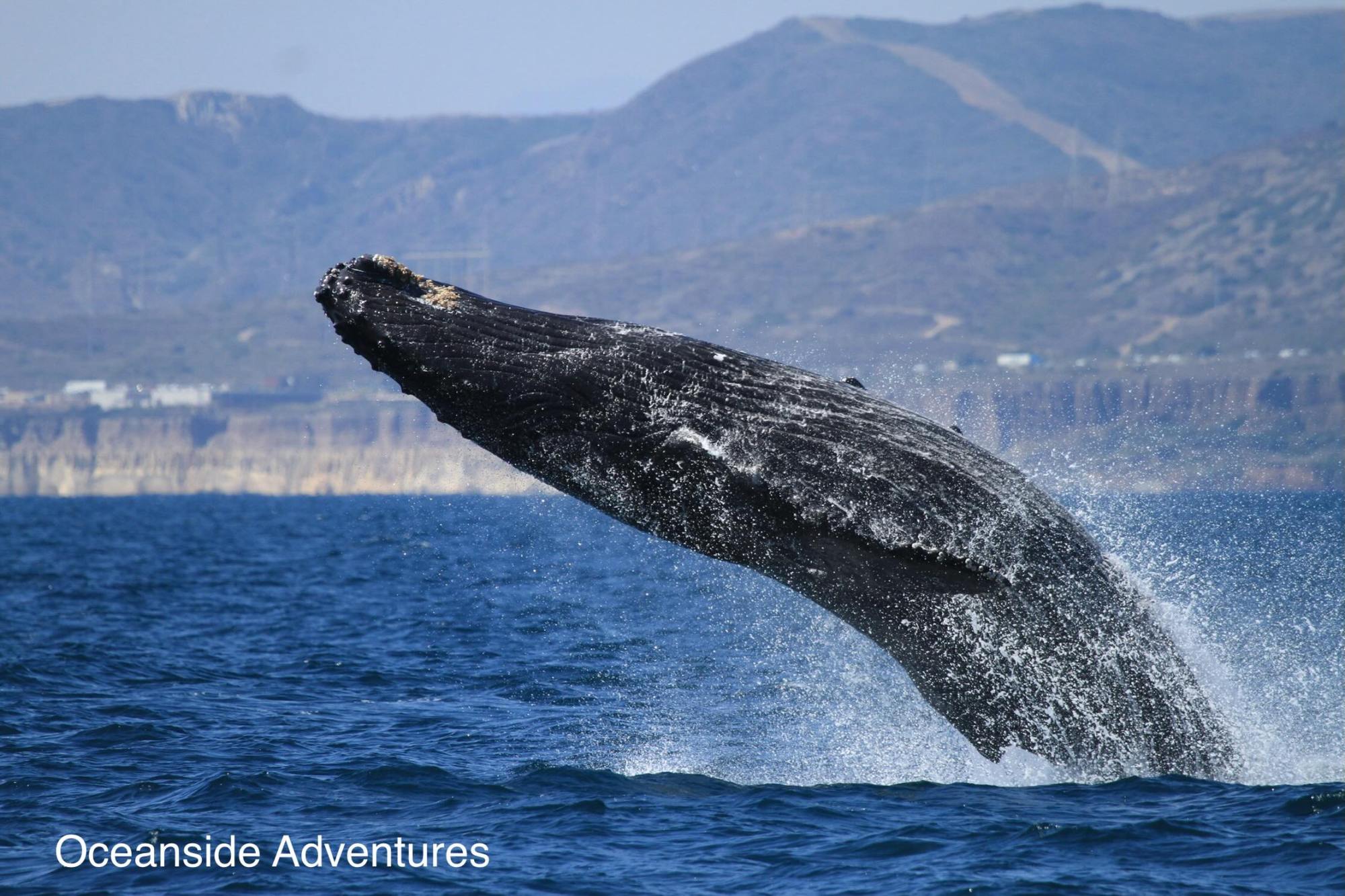
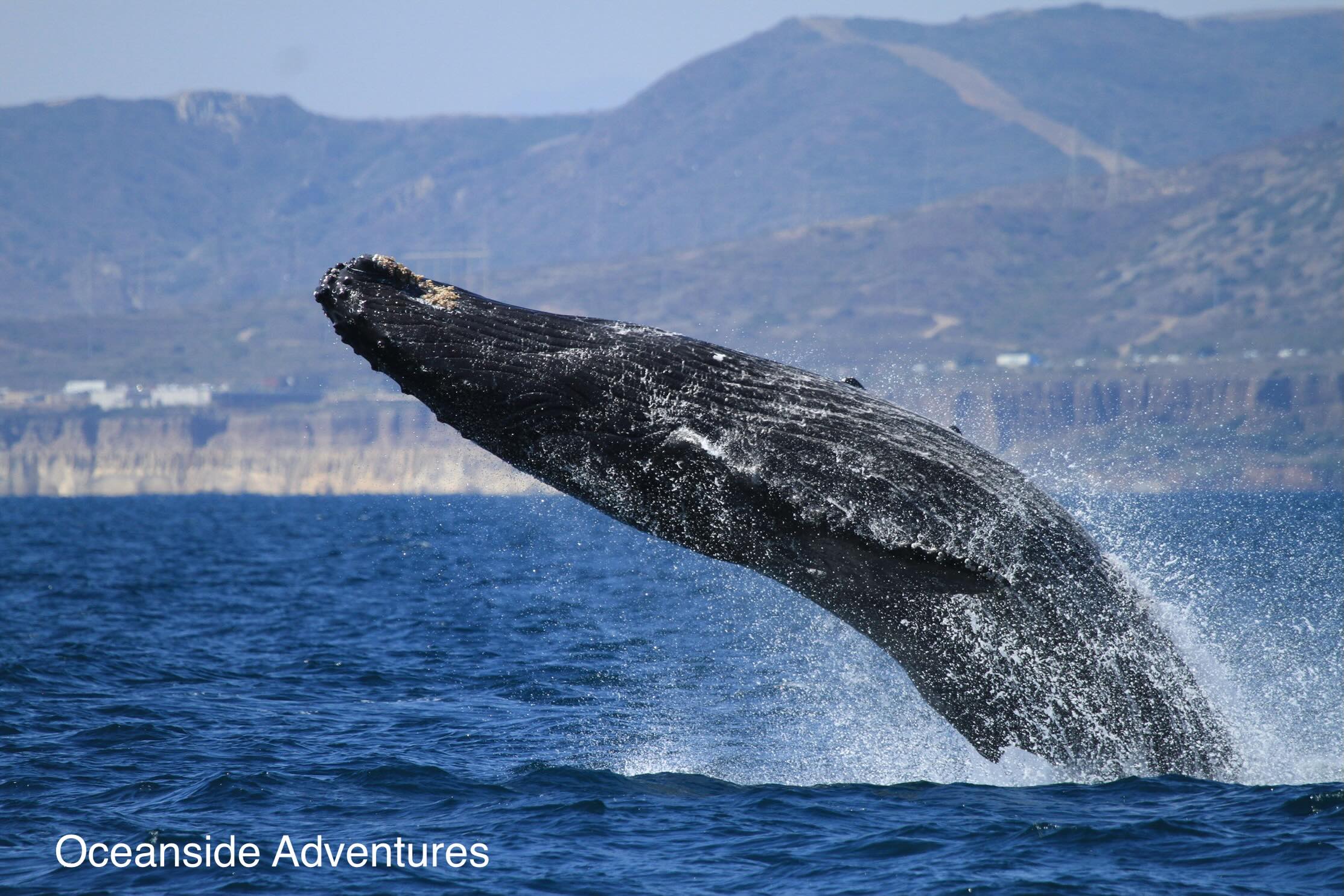
These months are prime time for fin whales, the second-largest animal on the planet after the blue whale. Fin whales stretch to around 75 to 85 feet and are among the fastest of the great whales, and they have been a genuine highlight off our coast in recent years. Humpbacks, famous for their breaching and tail-slapping, have also become an increasingly year-round presence here, putting on some of the most acrobatic shows we see. We have even had minke whales and the rare sperm whale turn up. If the drama of a surface-active whale is what you are after, learn more about fin whales off Oceanside and our resident humpback whales in Oceanside.
Dolphins Year-Round: The Constant Off Our Coast
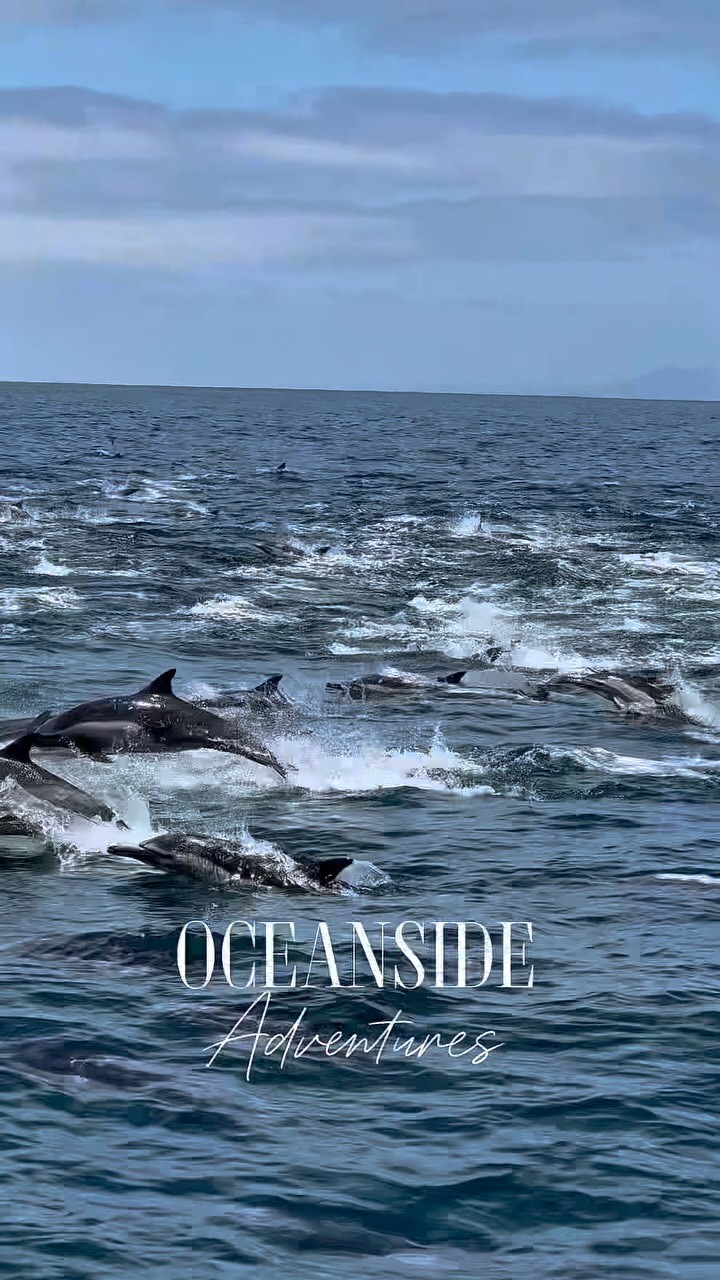
Whales come and go with the seasons. Dolphins never really leave. On any given trip, in any month, we have a strong chance of finding common dolphins, bottlenose dolphins, or, especially in the cooler months, playful Pacific white-sided dolphins. Common dolphins in particular travel in megapods that can number in the hundreds or even the thousands, and when a group that size decides to ride the bow, the whole ocean seems to come to life around the boat.
That year-round dolphin presence is a big reason we can promise action even outside the marquee whale windows. If a summer blue whale is a bucket-list sighting, a winter megapod is the everyday magic that keeps locals coming back. There is more on the species you are likely to meet in our guide to dolphin watching in Oceanside.
When Is the Best Time of Day to Go Whale Watching?
Season sets the odds, but the time of day shapes the experience. Mornings usually bring the calmest, glassiest water, which makes spotting blows and flukes easier and tends to be gentler on anyone prone to seasickness. Later trips trade a little of that calm for warmer air and, on our evening departures, beautiful low-angle light that turns the whole coastline gold.
The truth is that whales do not run on a strict schedule, and we have had spectacular encounters at every hour we operate. If conditions matter most to you, book a morning trip. If you want the light and the sunset, choose the afternoon or evening. Either way, the animals are out there. What matters far more than the hour is simply getting on the water during the right season for what you hope to see.
Why Watch From Oceanside Harbor?
San Diego is a big county, and where you leave from changes the trip. From Oceanside Harbor, at the north end of the region, we have one real advantage that is hard to beat: deep water sits remarkably close to our harbor mouth. An underwater canyon drops off just offshore, which means we spend less time motoring out and more time actually with the animals. You can read how that geography works in our piece on the underwater Oceanside canyon.
Add in easy parking, an uncrowded harbor, and smaller, more personal boats, and you get an experience that feels a world away from a packed-deck tour. For anyone coming from Carlsbad, Vista, Escondido, Encinitas, Camp Pendleton, or anywhere across North County, Oceanside is simply the closest and most convenient launch point for the whole San Diego whale watching season. We break down the geography of your options in our guide to whale watching near San Diego.
Ready to Pick Your Season?
Whenever you are reading this, something is happening off our coast. Gray whales in winter, blue whales in summer, fin whales and humpbacks in between, and dolphins all year long. Every tour is two hours on the water aboard a comfortable catamaran, narrated by a captain and a certified naturalist who know these animals and this coastline by heart.
Take a look at our whale watching cruise for the full rundown, then check the calendar and book your trip. Pick your season, and we will see you at the harbor.