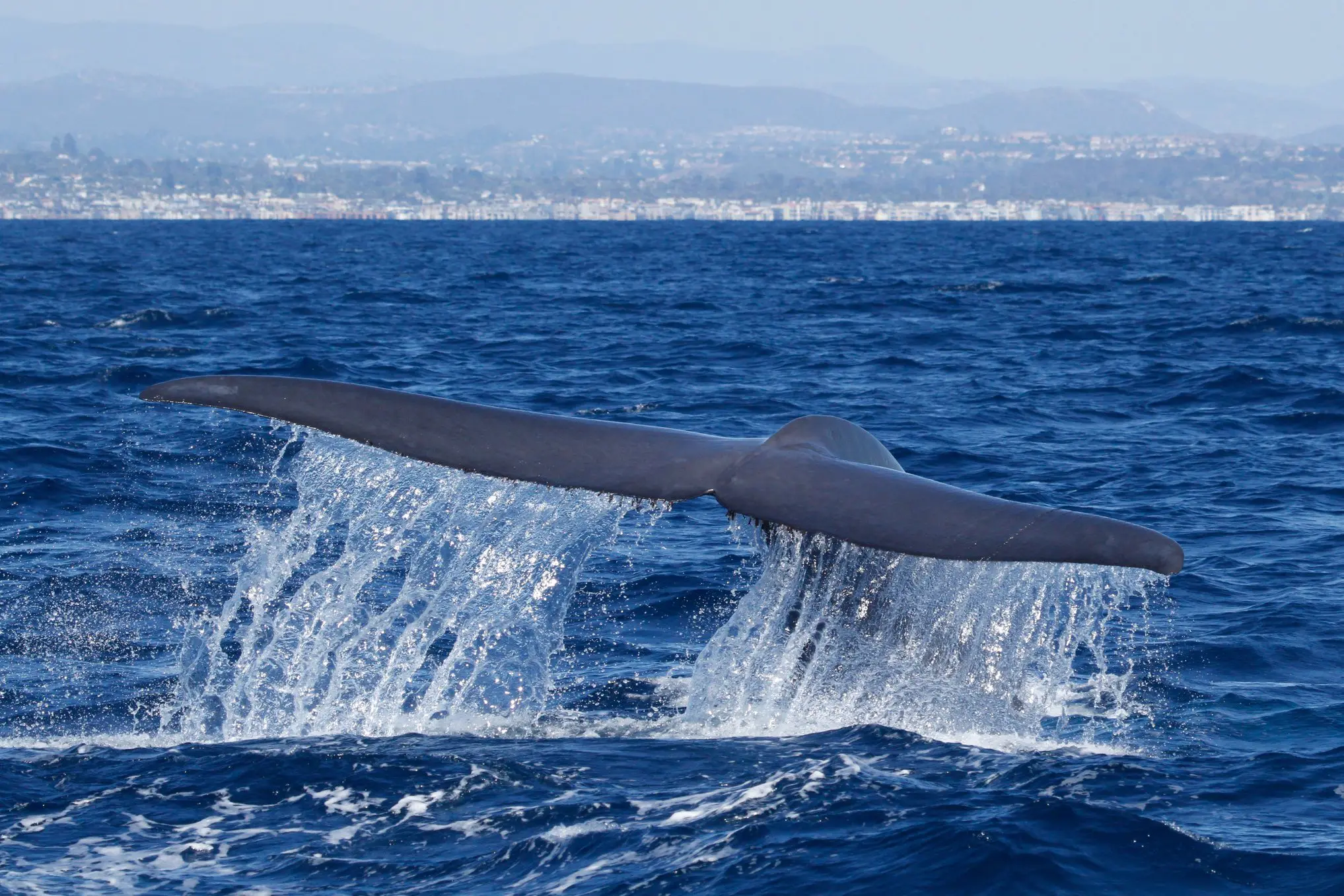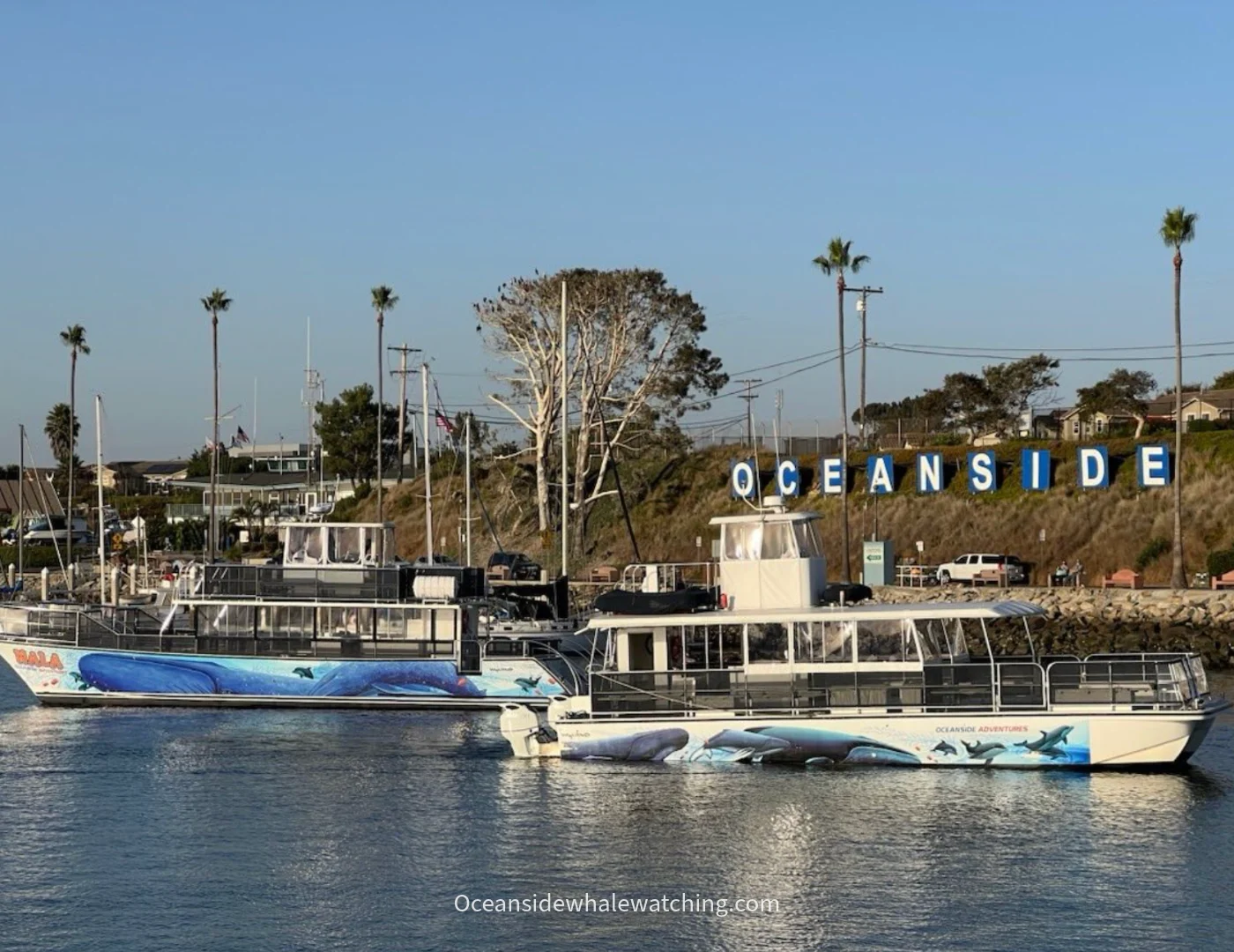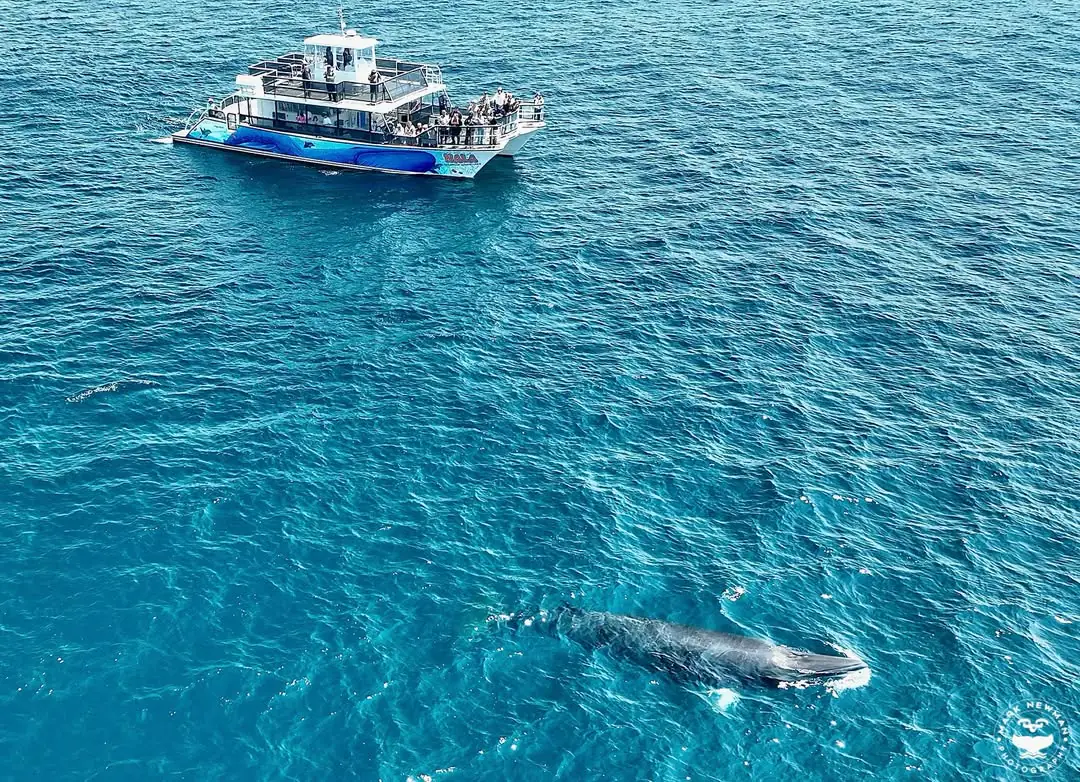

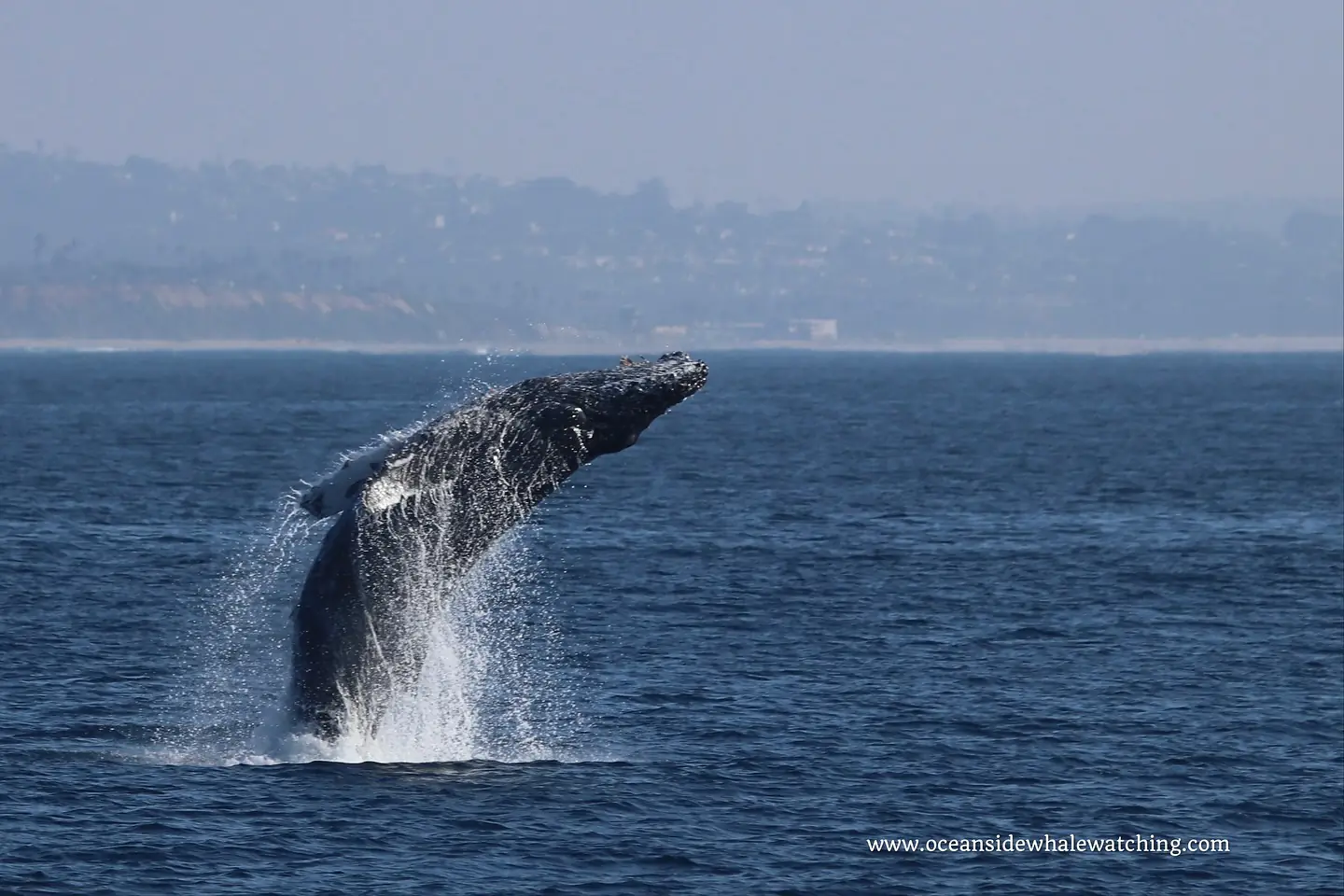
If you’ve gone whale watching out of Oceanside Harbor in December and then again in April, you might have noticed a completely different vibe on the water. While the target species, the California Gray Whale, remains the same, their behavior, speed, and traveling companions change drastically as the seasons shift.
Here is exactly what changes when Oceanside transitions from winter to spring whale watching. For the rest of the year, see our month-by-month guide to whale watching season in Oceanside.
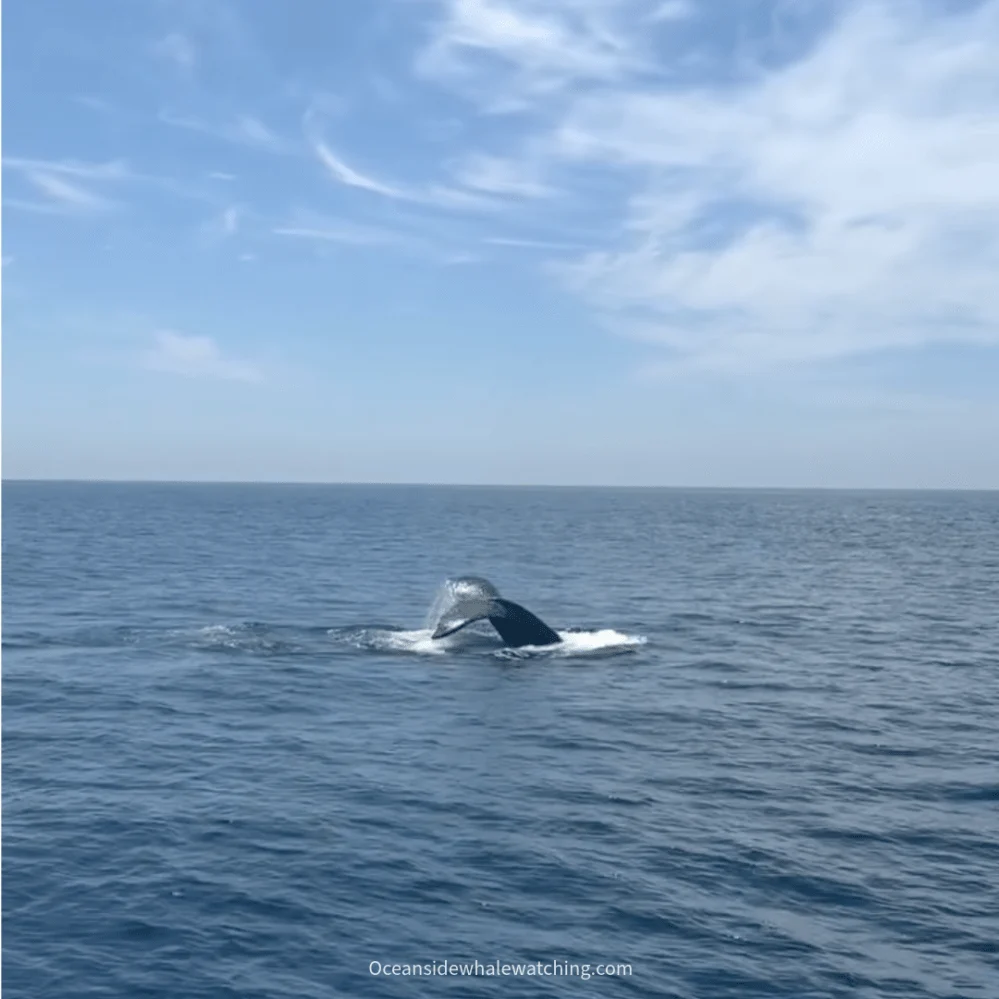
Winter: The Southbound Sprint (December to February)
During the peak of winter, the Gray Whales are on a mission. They are swimming south from the freezing waters of the Bering Sea in Alaska down to the warm, protected lagoons of Baja California, Mexico, to mate and give birth.
The Pace: These whales are moving fast. They have a long way to go and are laser-focused on reaching Mexico.
The Sighting: You’ll often see adults traveling in pods of two or three, cruising steadily. They tend to take a few quick breaths at the surface before going down for a deep, long dive to cover more ground.
The Vibe: The air is crisp, the ocean has that beautiful winter clarity, and the thrill is all about keeping up with these fast-moving giants as they cruise past Camp Pendleton and the Oceanside Pier.
Spring: The Northbound Nursery (March to May)
As winter thaws into spring, the migration flips. The whales have finished their time in Mexico and are heading back north to Alaska for their summer feeding season. This is our favorite part of the season.
The Pace: The journey slows way down, because the mothers are now traveling with their newborn calves.
The Sighting (Mom and Calf): A Gray Whale calf isn’t born with the stamina of an adult, so the mother has to travel at a much slower, more relaxed pace. You will often see the mom surfacing right alongside her much smaller calf, sometimes even helping it lift its head out of the water to breathe.
The “Coastline Hug”: To protect their calves from predators (like orcas) lurking in deeper waters, mothers will “hug” the coastline. This means a spring mom and calf off Oceanside is often only a mile or so off the beach.
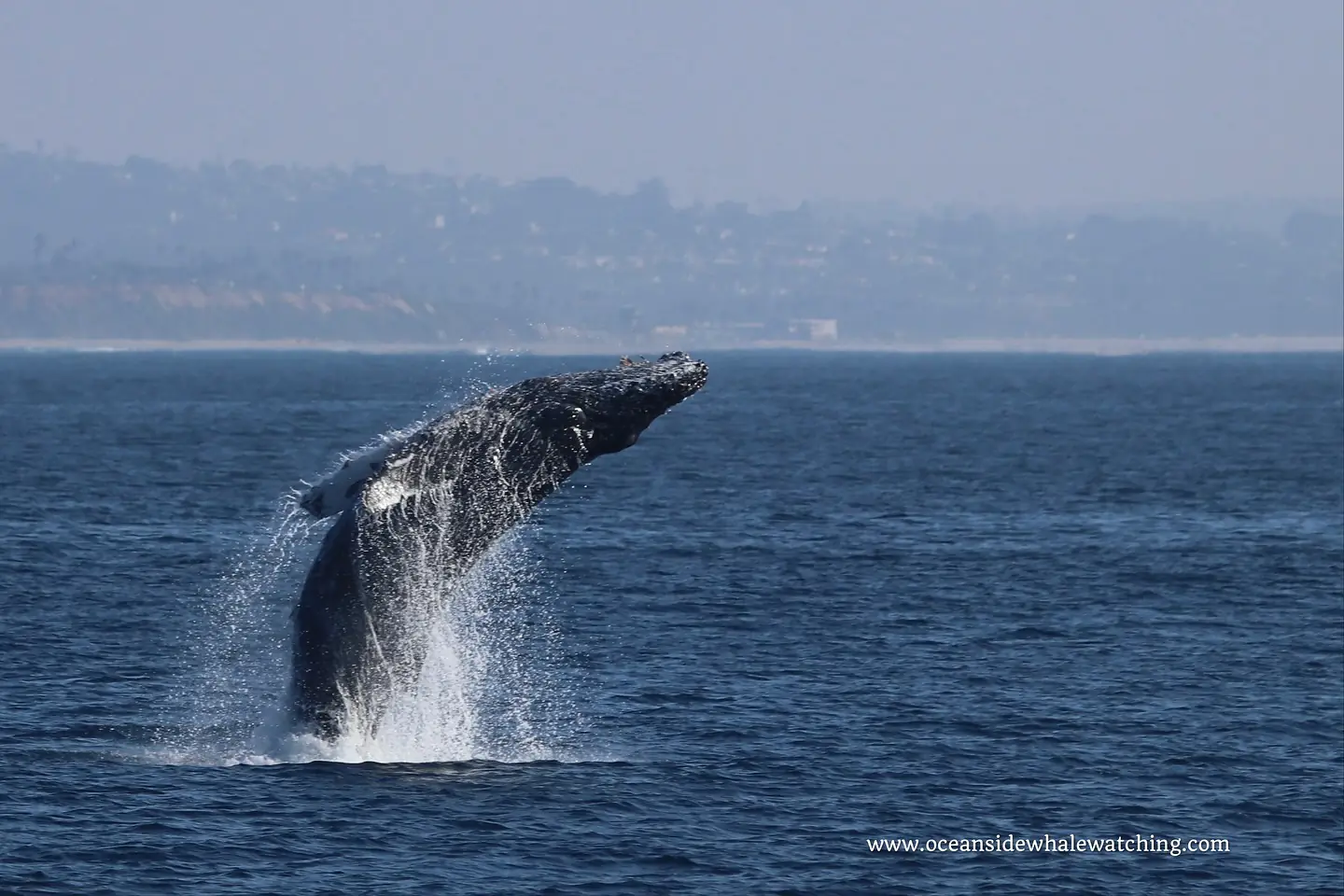
What Stays the Same? The Mega-Pods!
While the Gray Whales change their travel plans, our local dolphins do not care what the calendar says. Sail with Oceanside Adventures in January or April and there is a good chance of massive “mega-pods” of Common Dolphins escorting the boat. We often see dolphins all year round, and watching hundreds of them surf the wake on our whale and dolphin watching cruise is fun in any month.