
HOW TO AVOID SEASICKNESS ON A WHALE WATCHING TOUR IN OCEANSIDE (TIPS FROM OUR CAPTAINS)
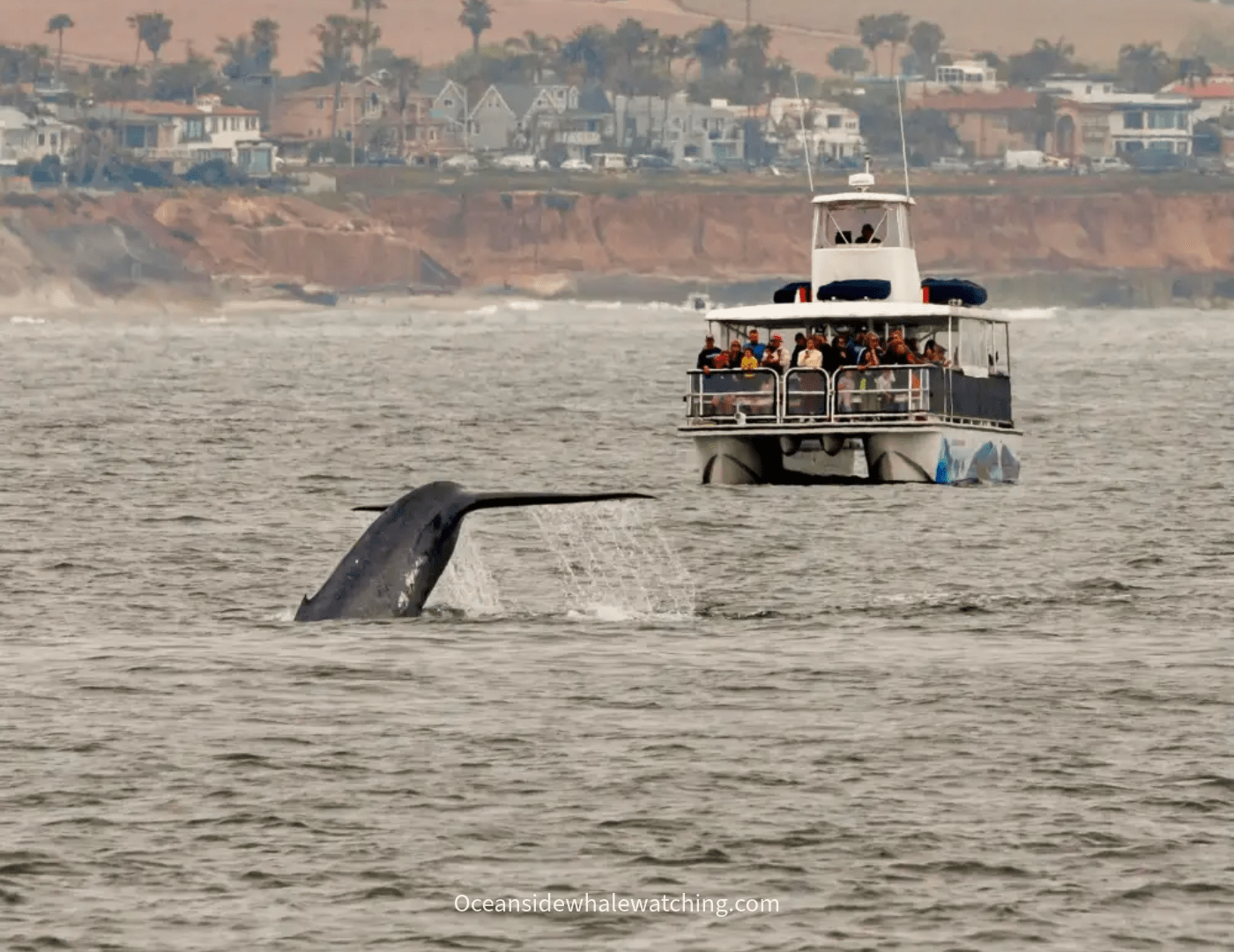
If you have ever stood on a dock and asked yourself whether your stomach can handle two hours offshore, you are not alone. It is one of the most common questions our office gets every week. The honest answer: most people do just fine on our trips, and the few simple steps below stack the deck even further in your favor.
Seasickness is real, but it is also more preventable than most first-time guests realize. Our captains and naturalists have run thousands of tours out of Oceanside Harbor, and the same playbook works almost every time. Here is what we tell guests at the office when they call worried about it.
Why You Probably Will Not Get Sick on a Trip Out of Oceanside
Two things make Oceanside a kinder departure point than most of the California coast. The first is the geography of the harbor itself. Oceanside Harbor sits in a sheltered pocket of north San Diego County coastline, and our boats stay inside that sheltered zone for the first few minutes of the trip. By the time we move into open water, you have already had time to find your sea legs.
The second is what happens once we clear the breakwater. The shelf off Oceanside drops to deep water unusually close to shore. We do not have to push miles offshore to find whales the way some other ports do, which means less time in the open, exposed waters where swell can build. If you want to go deeper on why this matters for our trips, our piece on how the Oceanside Canyon delivers the action walks through the underwater terrain that makes our trips so productive and, conveniently, so comfortable.
The third factor is the boat. We run a 47-foot catamaran and NALA, our 63-foot double-deck catamaran. Catamarans use two hulls instead of one, which dramatically reduces side-to-side roll in the same swell conditions that would make a monohull pitch and roll. We wrote a full breakdown of why a catamaran is your best friend in winter for guests who want the engineering details, but the short version is: a stable platform makes a world of difference for sensitive stomachs.
What Actually Causes Seasickness
Seasickness is a mismatch between what your inner ear feels and what your eyes see. Your inner ear senses the boat moving. Your eyes, if they are fixed on something close to you like a phone, a book, or the cabin wall, tell your brain that nothing is moving. Your brain interprets that mismatch as a possible toxin and triggers nausea as a protective response.
Everything we tell guests below is designed to either reduce the boat motion you feel, or to give your eyes the same information your inner ear is getting. When those two signals line up, the nausea response shuts off.
What to Do Before You Board
Most of the work happens before you ever step on the boat. Here is what we recommend:
- Eat a light, plain meal about an hour before departure. The single most common mistake we see is guests skipping food because they think an empty stomach will help. It will not. An empty stomach makes seasickness worse, not better. Toast, a banana, a plain bagel, oatmeal, or a small turkey sandwich are ideal. Avoid greasy, spicy, or very acidic food the morning of your trip. Heavy coffee on an empty stomach is another common culprit.
- Hydrate the day before and the morning of. Dehydration amplifies nausea. Skip the second cocktail the night before a tour.
- Take an over-the-counter motion sickness medication about an hour before boarding. Dramamine and Bonine both work well. Bonine (meclizine) tends to be less drowsy than Dramamine (dimenhydrinate). Take the non-drowsy formula if you want to stay sharp for whale sightings. Read the label, follow the recommended dose, and take it early enough for it to actually be in your system when we leave the dock.
- Sleep well the night before. Fatigue makes the body more susceptible to motion sickness. A real night of sleep before a morning departure is one of the best things you can do.
- Consider ginger. Ginger candies, crystallized ginger, or ginger tea genuinely help some people. It is not a substitute for medication if you are very sensitive, but for mild cases it is a worthwhile add-on with no downside.
- Sea-Bands. These acupressure wristbands work for some people and not for others. They are inexpensive and worth trying on a calm trip before you commit to them on a rougher one.
What to Do Once You Are on the Boat
The moment you step aboard, the playbook continues. The biggest single thing you can do is stay outside. The covered cabin is comfortable for staying out of the wind, but it is the worst place to be if you start feeling off. Inside the cabin, the walls are fixed in your vision while your inner ear is reporting motion. That mismatch is exactly what triggers nausea. Outside on the deck, your eyes see the horizon moving the same way your inner ear does, and the signals line up.
- Find a spot along the rail and look at the horizon. Not the deck. Not the water immediately next to the boat. The actual horizon line, where the ocean meets the sky. Keep your eyes on it whenever you start to feel anything.
- Stay in the open air. Fresh sea air on your face helps. The middle of the boat moves the least, so if you are nervous, that is the most stable spot. The back deck is also a good choice, where the wake gives you a moving reference point.
- Do not look at your phone or camera screen for long stretches. This is the modern equivalent of reading a book in a moving car. It is one of the fastest ways to feel sick. Take pictures, then put the phone away and look out at the water.
- Keep sipping water. Small sips. A little ginger ale or plain water every few minutes helps.
- Tell the crew if you start feeling off. Our naturalists and deckhands have seen it all and can quietly help you find the best spot, get water, or grab a ginger candy from the office. There is no embarrassment. We genuinely want every guest to enjoy the trip.
If You Start to Feel It Anyway
Sometimes, despite everything, the early signs show up: a little dizziness, a heavy feeling in the stomach, a touch of cold sweat. Catch it early and you can almost always head it off. Move to the rail if you are not already there. Find the horizon. Take slow, deep breaths. A small amount of cold water on the back of the neck or wrists can help. Most guests who catch it early feel much better within ten or fifteen minutes.
If you do end up needing to be sick over the rail, do it on the downwind side. The crew will quietly point you to the right rail and bring you water afterward. It happens. We have buckets if needed. You will not be the first guest of the season this has happened to, and almost everyone who gets sick once feels better for the rest of the trip after the body resets.
Kids, First-Timers, and Seasickness
Kids over the age of about two generally do very well on our trips. Their inner ear systems are flexible, they are usually entertained enough to keep their eyes outside the boat, and the catamaran motion is gentle. The same prep rules apply: light breakfast, plenty of water, a Sea-Band if you want a non-medication option. For children under twelve, talk to a pediatrician or pharmacist about whether motion sickness medication is appropriate, and confirm the dosing for their weight. Most kids do not need anything at all.
If this is your guest’s first time on a boat of this size, our first time whale watching in Oceanside guide walks through the whole trip experience, from parking and check-in to what the captain narrates while we are on the water. Knowing what to expect dramatically reduces the anxiety that contributes to motion sickness.
Pregnancy and Motion Sickness Medication
This is a question that comes up. We are not in a position to give medical advice, but pregnant guests should talk to their doctor before taking Dramamine or Bonine, both of which have category considerations. Sea-Bands and ginger are non-medication options. Many pregnant guests have enjoyed our trips without issue, especially during calmer summer and early fall conditions. If your doctor clears you for the trip, the same prep rules apply: light meal, hydration, fresh air, eyes on the horizon.
Are Some Days Worse Than Others?
Yes. The ocean is not the same every day. Most days off Oceanside are easy, especially in summer and early fall when conditions are typically calm. Winter and spring can bring bigger swell, particularly after a storm system has moved through. Our captains check conditions every morning before departures and make calls about whether to run. If conditions are genuinely too rough for a safe and enjoyable trip, we will postpone. The captain’s call is always the right one.
If you are particularly sensitive and you want to maximize your odds of a glassy ocean, the late summer and early fall window (August through October) tends to deliver the calmest conditions of the year. Our breakdown of the best times for whale watching in Oceanside covers what to expect month by month if you have flexibility in your booking date.
And if you want a deeper read on why the water off our coast tends to be unusually well-behaved compared with other stretches of California, our piece on why Oceanside’s calm waters make for the best whale watching experience gets into the coastline orientation, the swell shadow, and the harbor design.
What Our Sister Operation Tells Their Guests
Our sister team up the coast at Dana Wharf has written their own captain’s guide to how to avoid seasickness on a whale watching tour. The advice overlaps with ours in most places, which is reassuring, because both teams have been running tours out of Southern California for decades. If you want a second take on the same playbook, that one is worth a read.
The Honest Bottom Line
The overwhelming majority of guests on our trips never feel a thing. Most of the people who worry about seasickness end up wishing they had not bothered, because they spend the whole trip leaning on the rail watching whales and forget they were ever anxious. The basic playbook works: light meal, hydration, an over-the-counter med if you are sensitive, fresh air, and eyes on the horizon. If you have any specific concerns, call our office before you book. We would rather talk through the situation than have a guest miss a trip they would have loved.
If you have your eyes on a sailing, browse our two vessels, take a look at the frequently asked questions page, or grab a spot through our whale watching booking page. We will see you at the harbor.